

A sublimation blank is the raw canvas of the personalization business: a coated PU or faux leather shape that turns into a notebook, a tray, a keychain, or a luggage tag the moment a heat press meets it. The quality of that blank decides whether a bulk order becomes a repeat customer or a chargeback. Yet most first-time buyers judge a blank by its price and its photo, never by the coating uniformity, the heat ceiling, or the edge seal that actually determine print results. This guide explains what makes a good PU and faux leather blank, how to test one before committing to a bulk run, the printing settings that work per product, and how Shenzhen Casta Leather Co., Ltd supplies, coats, and quality-checks blanks for overseas printers and resellers.

A sublimation blank is any leather-look item engineered to accept dye-sublimation printing. Dye sublimation works by turning solid ink into a gas under heat; that gas penetrates the polyester component of a special receiving coating and bonds below the surface, so the image becomes part of the material rather than a film on top. On PU and faux leather, this means a white or light PU face laminated to a substrate, with a thin polyester receiving layer roll-applied to the printable side.
Coating uniformity is the single most important property. If the receiving layer is patchy, the press produces light and dark patches that no artwork adjustment fixes. We apply the coating by roll at a controlled gap and speed, then density-check a swatch from each batch under a spectro reading so a 5,000-piece run prints the same as the approved sample. Heat resistance is the second property: a blank must hold 200°C for 60 seconds without yellowing, curling, or releasing odor, because many presses run hot and a marginal blank fails on the production floor, not in the lab.
Edge sealing is the third. A blank cut from coated PU has a raw edge where the core shows and the coating stops. If that edge is not painted or stitched, it frays, absorbs moisture, and shows a white sliver that ruins a full-bleed border. Quality blanks get a painted edge or a stitched border so the color runs clean to the perimeter.
Mistake 1: Buying on price per blank without a coated sample. Two blanks at different prices may look identical in a photo but behave differently under the press. A cheaper blank with uneven coating prints blotchy and gets rejected by the end customer, so the real cost is the re-run, not the unit price. Always press a sample before bulk.
Mistake 2: Ignoring coating uniformity. Ask for a density reading or press a grayscale test strip. A blank that prints a smooth gradient is worth more than one that saves a cent and prints banding across every unit.
Mistake 3: Pressing above the heat ceiling. Pushing temperature to hide a slow warm-up yellows the PU and crisps the edge. Validate the blank at its rated ceiling — we test ours at 200°C for 60 seconds — and measure the platen instead of guessing. A blank rated at 180°C should not be run at 210°C.
Mistake 4: Skipping the edge-seal check. A raw cut edge frays and shows white at the border within weeks. Check that the blank has a painted or stitched edge before committing; for full-bleed designs this is the difference between a clean border and a rejected batch.
Retail and Etsy sellers should start with stock blanks — notebook covers, keychains, and luggage tags — in standard shapes with custom printing. Low MOQ and fast turnaround let a seller test designs without tooling. Choose blanks with a proven coating so the first order looks like the sample.
Gift and promotional distributors need consistency across a mixed catalogue. Because notebook covers, trays, keychains, card holders, and tags all come from one coated PU family, a distributor can run one material spec across a gift set and one quality standard. Specify the same coating grade on every SKU so colors match between items.
Corporate brand and HR buyers ordering logo merchandise want OEM and ODM support: custom shapes, debossed logos alongside sublimation, and branded packaging. Here the supplier's coating control and tooling lead time matter more than unit price, because a misregistered logo on 10,000 units is a recall.
Wholesale resellers and printers buying in volume should negotiate batch density certification and edge-seal standards in writing, and order a standing specification so every shipment matches. Ask for per-batch test data rather than a one-time approval.
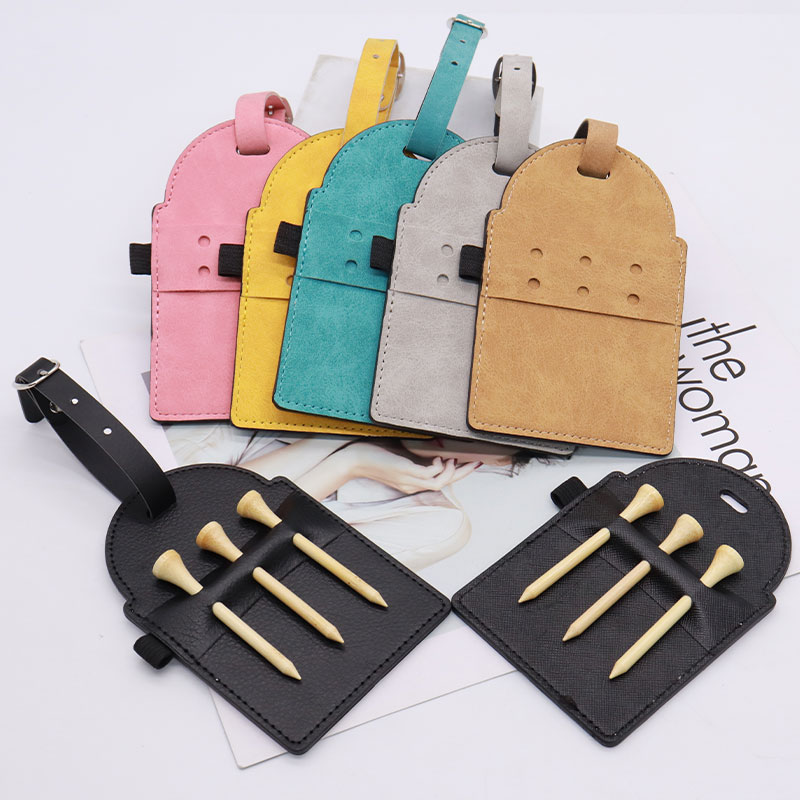
| Spec | Notebook cover | Tray panel | Keychain | Luggage tag | Card holder |
|---|---|---|---|---|---|
| PU thickness | 1.2–1.8 mm | 1.2–1.8 mm | 1.4–2.0 mm | 1.0–1.5 mm | 0.8–1.2 mm |
| Rated ceiling | 200°C / 60s | 200°C / 60s | 200°C / 60s | 190°C / 55s | 195°C / 55s |
| Edge seal | Painted or stitched | Stitched or painted | Painted | Stitched flap | Cut or stitched |
| Coating check | Batch density | Batch density | Batch density | Batch density | Batch density |
| Typical MOQ | From 300 | From 300 | From 200 | From 300 | From 300 |
Single-family coating across the catalogue. Buyers now expect notebook covers, trays, keychains, tags, and card holders to share one coated PU grade so a gift set prints in matching color. Suppliers who coat in-house can hold that standard; traders who source blanks from five factories cannot.
Recycled and compliant PU. EU and North American buyers request recycled-content PU and REACH-compliant coatings, and they ask for test reports at the order, not after a complaint. Coating chemistry that meets these limits is becoming a qualifier for tenders.
Small-blank printing support. Keychains, coasters, and tags demand tight registration, so blanks now ship with exact die-line artwork templates, 3 mm bleed, and safe zones so a logo never lands on a cut edge or a snap hole. This shifts quality control upstream to the blank, not the press operator.
Case 1: A US printer fighting blotchy notebook covers. The printer's existing blank printed light patches across the spine on roughly one in eight covers, and the supplier could not explain it. We supplied our own coated blank with a roll-applied receiving layer density-checked per batch; a grayscale test strip confirmed even gradient before production. Press settings stayed at 190°C for 50 seconds at medium pressure, and the printer ran 8,000 covers with patch rejects below 0.5%. The printer moved its tray and keychain blanks to the same coating grade.
Case 2: A European reseller with yellowing keychains. The reseller's keychains yellowed at the edge when pressed at 205°C for 70 seconds, and the coating bubbled on a cold-start platen. We re-rated the blank at 200°C for 60 seconds, issued a platen-temperature checklist, and added a painted edge that hid any marginal heat at the perimeter. Fifty units per batch were heat-soak tested at the ceiling; none yellowed. The reseller's credit rate on the SKU fell from 6% to under 1% the next quarter.
Shenzhen Casta Leather Co., Ltd coats its own PU panels rather than reselling traded blanks, which is the root of consistent print quality. For this category specifically, our relevant capabilities are in-house roll coating with per-batch density certification, heat-ceiling validation at 200°C for 60 seconds, painted or stitched edge sealing on every cut shape, and a single coated PU family shared across notebooks, trays, keychains, tags, card holders, coasters, and phone cases. Because the same coating grade runs across the catalogue, a gift set prints in matched color from one supplier, and OEM or ODM custom shapes draw on the same line. Blank specifications and coating data are at https://www.cncasta.com/.
Our blank process is built around coating control. First, substrate selection: PU thickness is matched to the end product — 1.2 to 1.8 mm for covers and trays, 1.4 to 2.0 mm for keychains, 0.8 to 1.2 mm for card holders — and the core is specified for flatness. Second, coating: the polyester receiving layer is roll-applied at a fixed gap and speed, then a swatch from each batch is density-checked so coating uniformity holds across the run. Third, heat validation: every blank grade is soak-tested at its rated ceiling, 200°C for 60 seconds, for yellowing, curl, and odor before release. Fourth, cutting and sealing: blanks are die-cut on matched dies and given a painted or stitched edge so the color runs to the perimeter without fray. Fifth, artwork support: we issue exact die-line templates with 3 mm bleed and safe zones for small blanks. Sixth, certification: each shipment carries batch density and heat-test data, and OEM or ODM custom shapes get a physical proof and tooling lead time before bulk.
Press a grayscale gradient strip and a full-bleed color at the rated settings, then inspect for banding, edge yellowing, and white slivers at the border. Ask the supplier for a batch density reading. If the blank passes on the sample but the bulk varies, the coating is not controlled — choose a supplier that coats in-house and certifies each batch.
Most of our PU blanks are validated at 185 to 200°C for 50 to 60 seconds at medium pressure. Larger panels like notebook covers and trays use medium pressure for even contact; small blanks like keychains need a firm base so pressure is even across the shape. Always measure the platen and avoid raising temperature to compensate for a cold start.
A raw cut edge shows the core and a white sliver, and it frays with handling, so a border that should be clean looks unfinished. A painted or stitched edge seals the core and lets color run to the perimeter. For any design that bleeds to the edge, specify the edge seal before ordering.
Stock shapes with custom printing start in the low hundreds of pieces per design. Custom silhouettes need a dedicated die, which adds roughly a week and a physical proof before bulk. Prototypes are typically ready in seven working days. Send artwork and quantities to yinjinfeng@szcasta.com or call +86 18675583959 (WhatsApp available) for pricing and coating data.
Shenzhen Casta Leather Co., Ltd
Hotline : +86 18675583959 (WhatsApp available)
E-mail : yinjinfeng@szcasta.com
Room 101, Unit 1, No.36 Ainan Road, Longdong Community, Baolong Subdistrict, Longgang District, Shenzhen City
Website: https://www.cncasta.com/


