

A sublimation passport cover is one of the highest-margin items in the personalized travel gift category: it is small, it ships flat, and a full-color print turns a plain PU holder into a wedding, graduation, or corporate travel gift. But the category is also full of covers whose print fades at the spine, whose elastic band snaps in a month, or whose sizing leaves a corner of the passport exposed. This guide covers the construction of a PU leather sublimation passport cover, the four mistakes that cause reprints and returns, how to match formats to gift programs, the sizing and stitching specs that matter, and how Shenzhen Casta Leather Co., Ltd prototypes, prints, and quality-checks passport covers for gift retailers and corporate buyers.
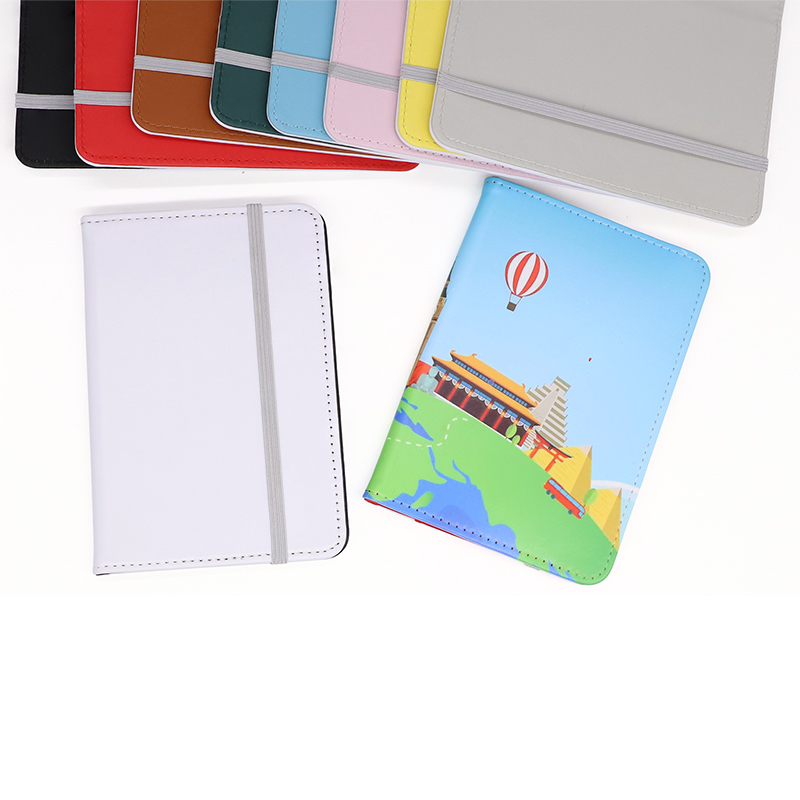
A sublimation passport cover is a two-piece or wrap-around sleeve cut from sublimation-ready PU leather, sized to hold a standard passport measuring 125 x 95 mm with 2 to 3 mm of play so the booklet slides in without scuffing the corners. The construction layers are simple but each one decides quality: a sublimation-coated white PU face that receives the print, an adhesive layer, and a backing sheet that can be PU or microfiber for the interior. The front, back, and spine are printed in one flat transfer, then the cover is folded and stitched or edge-painted along the opening.
Sublimation works because the coated face is engineered to accept dye at high temperature: the artwork is printed on transfer paper, pressed at roughly 190 degrees Celsius for 40 to 60 seconds under medium pressure, and the dye bonds into the coating rather than sitting on top like ink. This is why the coating quality matters more than the printer — a patchy or thin coating produces washed-out areas no amount of press time can fix, while a dense, flat coating produces photographic color with fine text legible at 6 pt.
Closures divide the category into three families. The elastic-band cover is the slimmest and cheapest: a wide elastic strap holds the cover shut and doubles as a pen loop or money strap. The zippered cover wraps three sides in a zip and can hold cards, boarding passes, and SIM tools, turning the passport cover into a mini travel wallet. The snap or magnetic cover sits between the two and is common for sets. Interior configurations range from a single passport pocket to dual slots holding two passports, card slots, and a ticket sleeve — the layout is decided at die-cutting, so it should be fixed before sampling.
Mistake 1: Buying blanks on coating thickness alone. Blank suppliers quote gram weights, but the number that decides print quality is coating uniformity. A blank with streaks in the coating prints with visible bands after pressing, and the defect only appears under raking light — after the retailer has already photographed and listed the product. Always press a sample from each blank lot and inspect at an angle before committing to bulk.
Mistake 2: Printing artwork across the spine fold. The spine flexes every time the passport is opened, and a continuous print across it develops hairline cracks within weeks. Split the artwork at the spine or mirror it so the fold falls on a dark or patterned zone; for photo covers, ask the factory to add a reinforcement crease that carries the flex instead of the coating.
Mistake 3: Ignoring interior slot engineering. A cover with two shallow card slots stacked behind the passport pocket bulges when loaded and pushes the zip track off line. Slot depth, stitch spacing, and the order of layers need to be engineered — not just sewn — or the cover looks fine empty and fails full. Specify what the cover must hold: one passport, passport plus two cards, or passport plus boarding pass, and sample with real contents.
Mistake 4: Skipping RFID decisions until production. Some markets — especially US and EU travel-gift retail — expect passport covers to mention RFID protection. An RFID-blocking liner is a laminated layer sewn into the interior, and it changes cost, thickness, and print behavior near the edges. Decide early whether the SKU ships with a liner, without one, or as two variants, because retrofitting the decision mid-run is expensive.
Wedding and favor buyers should choose the slim elastic-band cover in white PU. Full-color Mr & Mrs artwork, monograms, and dates print beautifully on sublimation PU, the unit cost stays low for favor quantities, and the elastic band survives a suitcase better than a delicate snap. Pairing a passport cover with a matching luggage tag in the same print is the standard retail bundle for this segment.
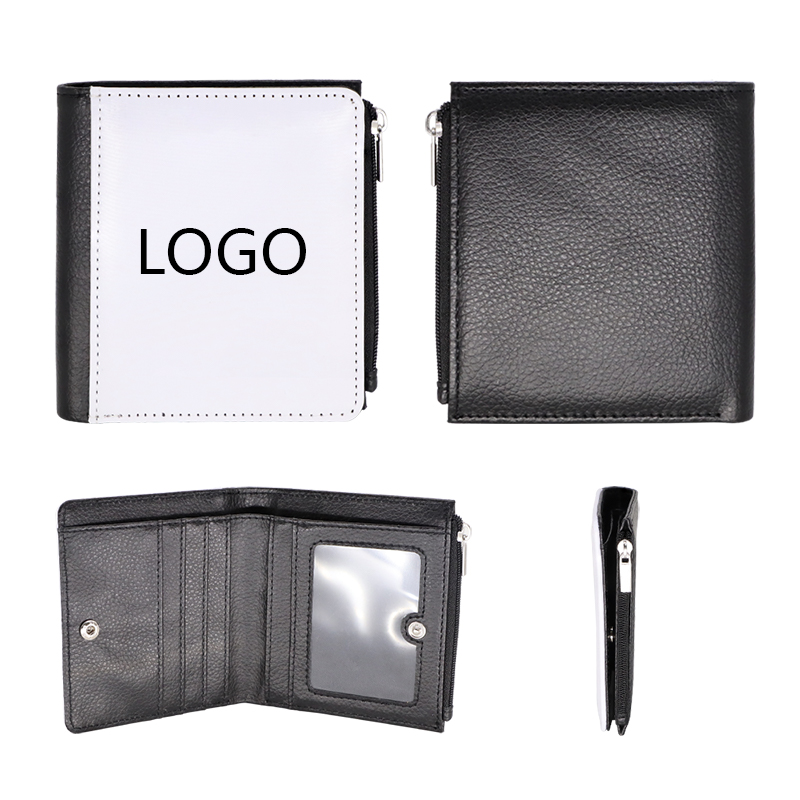
Corporate travel gift buyers need the zippered format. A company can print its brand across the exterior and still keep a clean interior with card slots for the traveler's corporate card. These are handed to employees and clients, so stitching density and zip smoothness matter more than unit price; a zip that grits after a month undoes the gift. Matte finishes photograph better for internal launch pages than gloss.
Retail and e-commerce sellers should run two variants: a plain sublimation blank cover for the personalization market and a finished printed design in three or four motifs for impulse purchases. Blanks sell to local print shops and personalization boutiques, while pre-printed designs capture travelers who buy online. Both variants can share the same die tooling, which keeps the cost difference at print and packaging only.
Wholesale and promotional distributors typically need the snap or elastic format at volume with a one-color logo. Here the priority is consistency across thousands of units: coating lot control, press calibration, and a color standard held at the factory. Ask for a retained golden sample so every repeat order is compared against it.
| Spec | Elastic band | Zippered wallet | Snap cover | Gift set (cover + tag) |
|---|---|---|---|---|
| Outer size | 140 x 102 mm | 145 x 105 mm | 140 x 102 mm | Cover 140 x 102 mm |
| Fits passport | 125 x 95 mm | 125 x 95 mm + cards | 125 x 95 mm | 125 x 95 mm |
| PU thickness | 0.8–1.0 mm | 1.0–1.2 mm | 1.0 mm | 1.0 mm |
| Interior | Single pocket | Passport + 3 card slots | Passport + 1 slot | Per configuration |
| RFID liner option | Yes | Yes | Yes | Yes |
| Closure test | 3 kg elastic hold | 100-cycle zip run | 5 kg snap pull | Per component |
| Typical MOQ | From 300 | From 300 | From 300 | From 200 sets |
Paired travel gift sets are dominating listings. Passport cover plus luggage tag sets — especially Mr & Mrs and family-themed bundles — are outperforming single covers in conversion, so buyers now order matched artwork across both items from one print file. Factories that can die-cut, print, and box both items from the same PU lot keep the color identical, which is the detail customers notice in photos.
RFID protection is becoming a stated feature, not an option. Travel gift buyers increasingly filter for covers that mention an RFID-blocking layer, and EU retailers ask for the liner's shielding claim to be supported. Suppliers who sew the liner in cleanly, without adding bulk at the stitch line, are winning shelf space.
Matte and soft-touch coatings over gloss. The market has shifted from high-gloss covers toward matte finishes that resist fingerprints and photograph cleanly for e-commerce. Matte sublimation coatings are harder to formulate — they must stay dense enough for full color — which is why buyers should sample a matte blank before assuming it prints the same as gloss.
Case 1: A US wedding-favor retailer with a 3,000-set Mr & Mrs program. Their previous supplier's covers showed banding in the print and the elastic bands relaxed within weeks. We pressed sample covers from three coating lots and measured transfer density under raking light, selected the densest lot, and moved the artwork so the spine fold fell on the dark background zone. The elastic was upgraded to a 25 mm woven band with a 3 kg hold spec and each batch was tension-tested. From artwork approval to shipment took 18 days for 3,000 paired sets with matching luggage tags; return complaints on print quality and bands fell to zero across the season, and the retailer extended the program with a graduation design.
Case 2: A German corporate client gifting 1,200 zippered travel wallets. The client wanted the logo on the exterior without it dominating, plus an RFID liner and a passport-plus-two-card interior. We built a proof with the brand embossed tonally rather than printed, sampled the interior with real cards and a passport to verify the bulge stayed inside the zip track, and ran a 100-cycle zip test on 40 units. Stitch density was raised to 8 stitches per centimeter at the load points. The full order shipped in 21 days with a 0.3 percent defect rate at client inspection, and the client added a matching card holder for the next run.
Shenzhen Casta Leather Co., Ltd treats the passport cover as a sublimation product first and a leather good second, which is why the print is the focus of our quality system. We coat our own sublimation PU sheets, so coating uniformity is controlled at the source instead of trusted to a blank trader; every lot is press-tested for color density before it enters production. For this category specifically, our capabilities include matched die-cutting that holds the 125 x 95 mm passport tolerance, spine reinforcement creasing that stops print cracking, interior slot engineering sampled with real contents, RFID liner insertion sewn without bulk, and closure testing — elastic hold, snap pull, and zip cycling — on every batch. Covers, luggage tags, and card holders share one PU family, so matched gift sets ship color-consistent from a single line. Format options and product photos are at https://www.cncasta.com/.
Six steps carry a passport cover from file to carton. First, coating lot control: sublimation PU sheets are press-tested per lot for density and flatness, and any lot with visible streaking is rejected before cutting. Second, pre-press check: artwork is inspected for spine-crossing prints, 6 pt text legibility, and bleed, and a digital proof is confirmed with the client before any transfer is run. Third, printing: transfers are pressed at 190 degrees Celsius for 45 to 55 seconds in calibrated flat presses, with pressure and dwell logged per shift so a 5,000-unit run prints like the sample. Fourth, die-cutting and creasing: the printed sheet is cut in matched dies and the spine receives a reinforcement crease that carries flex away from the coating. Fifth, assembly: interiors are stitched at 8 stitches per centimeter at load points, RFID liners are laminated and sewn flat, and closures — elastic, zip, or snap — are attached and tested to spec. Sixth, validation: sampled units are inspected under raking light for banding, filled with a real passport and cards to verify fit, cycle-tested for closure, and flat-packed with interleaves so the print does not scuff in transit.
Sublimation dye bonds into the coating rather than sitting on the surface, so color does not fade under normal handling. Cracking only occurs when continuous artwork crosses the spine fold; we review every file at pre-press, split or mirror prints at the spine, and add a reinforcement crease so the coating is never the part that flexes.
Yes. We sew a laminated RFID-blocking layer into the interior without adding noticeable bulk, and it can be applied to elastic, zippered, and snap formats. Buyers should fix the RFID decision before sampling because the liner affects thickness and stitch planning.
Standard formats with custom sublimation printing start from about 300 pieces per design; paired gift sets start from about 200 sets. Proofs are ready within five to seven working days after artwork approval, and bulk typically ships in two to three weeks. Send artwork and quantities to yinjinfeng@szcasta.com or call +86 18675583959 (WhatsApp available) for a quote.
Yes, we supply unprinted sublimation blank passport covers from the same coated PU as our printed production, so your press results match a known reference. We recommend pressing one sample per lot under raking light before your run, and we can share recommended press settings for our coating.
Shenzhen Casta Leather Co., Ltd
Hotline : +86 18675583959 (WhatsApp available)
E-mail : yinjinfeng@szcasta.com
Room 101, Unit 1, No.36 Ainan Road, Longdong Community, Baolong Subdistrict, Longgang District, Shenzhen City
Website: https://www.cncasta.com/


